
5/07/2023

4/25/2023
Gehenna Interview (2003)

Donald: Hello Kine. Before we get started there are many people who do not even know you by name. Gehenna is still a rather obscure band compared to some others out there, so I think it would be good to give a brief but complete introduction of Gehenna and its history to our readers as many may not know who you are.
Kine: Alright! Gehenna was formed ten years ago by Sanrabb, Dolgar and Sir Vereda. In the beginning they used to rehearse in Sanrabb's room in his father's house. I used to hang out with the guys at that time, and me and my friend Sarcana went to see them on their first show in our hometown Stavanger. They played together with 122 Stab Wounds, and soon after I joined 122 and Sarcana joined Gehenna. Dirge Rep soon replaced Sir Vereda, and there have been quite a couple of people involved after that too. For further information, check out our website: www.gehenna666.cjb.net
D: So you have a new album in store for the world, one that will go back to the older sound of the first three albums. A more melodic sound with the use of keyboards. I think this is a great idea, especially if you take the aggression and complexity of the last two albums and mix it with melody and symphonics of the first three. Why did you decide to do this? Who's idea was it? Any surprises in store for us?
K: Well, I guess we won't necessarily meet people's expectations, so I guess there'll be surprises in store, yes. The new album will not have the influences of death metal, as on Murder and Adimiron Black, it will be a pure black metal album. But it will still be different from the first three, less symphonic and more primitive and aggressive.

K: We're a bunch of lazy people, hehe! No, there have been several reasons for it; it's been hard to find a time where we're all available. I work and study and have also been involved in other bands. Same goes for Sanrabb. And Frost and Blasphemer have of course been busy with Satyricon and Mayhem. Besides this, all of us don't live in the same part of Norway.
D: You are now on Moonfog. Do you like them? How are they compared to Cacophonous and Head Not Found? Did you know that Cacophonous has recently been brought back into business?
K: Yeah, I think Dolgar told me something about that... Moonfog is fine; they're doing a better job than the other two labels it seems.
D: Does anyone in the band have any training in music, like music theory or classical studies? Can any one read and write tablature/sheet music notes? Are any notes used in the songwriting process? When one person writes a song do they write all the parts or just the arrangement and their part?
K: Yes, I've played classical piano since I was a little girl, and Sanrabb has also played lots of different instruments. We both read music notes, but we don't use notes in the songwriting process.
D: What are the current happenings of your past members? I know that Dirge Rep was in Enslaved for a while and Dolgar is, as far as I know, in Forlorn. How about all the other past members? I am especially interested in the whereabouts of Sarcanna loved her synth playing on Second Spell and Malice. I read that she quit the band because she did not like the new sound that they were going for after Malice, but now you are going back to the sound that she liked playing and I was wondering if you had heard from her at all. Does she have a web page or means of contact for any work that she might be doing now?
K: Well, we're not going back to the same style as she played... However, she lives in Denmark now, I talk with her very often and I've been visiting her a couple of times. Dolgar and me went to see her in March. She's doing fine, but not working with music as far as I know. Dolgar plays in Forlorn, that's right. Hehe, Stavanger is quite small, both me, Sarcana, Sanrabb and Blod have played in Forlorn before, and I'm going to do a show with them this summer.

K: Yes, we'll have synthless parts, because we like it and we don't think there should be synth on all the parts of our new songs... A bit boring for me though, but it sounds better :)
D: Gehenna has always looked at monotheistic religions in a rather negative way. Indeed such religions like Christianity and Islam are not being as peaceful as they claim. Do you think that these religions may actually one day wane from society? If you did not perform metal music, would you still look down upon these religions?
K: No, even though most societies are getting more and more secularized (is that the word? My English is far from perfect), I think the big religions will survive, but they'll be more a part of people's private lives than a part of the society itself. People might get less Christian or less Jewish, but I don't think people will become less religious. They'll just have more religious groups to choose from. My views on religion is not affected by my musical career or the other way around, I wouldn't like Christianity more if I didn't play in a metal band.
D: What do you think about the ancient polytheistic pagan/heathen religions of pre-Christian times? One of which, your country's ancient Asatru religion, is coming back strong in the metal scene with many people professing belief. Do you feel that these religions are valid and healthy, and might be what people go for if monotheism fails to answer their questions, and they have doubts?
K: I don't think the pagan religions are more or less valid than other religions, but the Nordic mythology can seem a bit more modern than Christianity in many ways. The Vikings didn't interpret the religious myths literally at all, they used them as models for morality, how to live and so on. They're also more "politically correct" from a feministic point of view, man and woman were made at the same time, and they were equals. It was also a good thing to search for wisdom; Odin made great sacrifices to gain wisdom. We all know what happened when Adam tried to do the same... Another difference is that the Nordic religion doesn't separate good and evil in the same dualistic way as the Christians do. The Vikings understood the world as an energized chaos, and the point was to control the chaotic powers into a well-functioning cosmos, not to erase the powers of chaos. The point is that religion in earlier times was more used as an ethical standard on how to live; the Christianity in today's Norway is there because people wonder what will happen when they die.

K: Yes, and nature too. Things to be less proud of is for example is that our prime minister is a priest....
D: What do you think of the music from your fellow countrymen Dimmu Borgir, Old Man's Child, and Borknagar? Do you know anyone from these bands personally? What are some other bands from your country that you know and/or like?
K: I'm not very fond of those three bands... The last Dimmu isn't bad though. I know all the guys in those bands, they're nice people. I've toured a lot together with Tyr from Borknagar; we used to play in Satyricon together. Norway is quite small, so I pretty much know everyone from the bigger bands, and I used to live together with Blasphemer from Mayhem. My favorites are: Emperor, Immortal, Darkthrone and Mayhem.
D: I always ask this to all the bands I interview. Many in the more obscure part of the underground often accuse certain bands of "selling out" if they change a bit of their music style or sign to a bigger label. Personally I do not see them making all the fame and fortune they are accused of trying to achieve. But the point is not whether they are "commercial" or not. The point is that if the music is good, does it really matter if they have "sold out" or not? Doesn't the quality of the music matter more than anything else? Where do you stand on this issue?
K: Well, there's an own club for people who just liked the first album of any given band isn't there? I think that people should be able to make exactly the kind of music they want to make, and if it sells and people like it doesn't change a damn shit, the records sounds just the same as it would if it had only sold 50 copies! Sell out is when you find a formula that works and sticks to it instead of developing your music. What's not selling out is if you just don't give a rats ass about what other people think and just make the music you like.
D: It seems that metal and video games are becoming more intertwined with time. Bands on and off the tour bus are starting to take to console games so much now that various metal magazines are starting to write video game reviews as well as music ones. Are there any gamers in Gehenna? If so, what consoles and games are favorites?
K: Playstation 2, Vice city!!! That goes for all of us, hehe

D: Does Gehenna bring you any income, or do you need to work an outside job to pay your bills? Does any one in the band have a spouse or kids?
K: Yeah, we have jobs; I think more or less everybody in the Norwegian scene does. No kids, but I've got a boa and Sanrabb's got a dog...
D: What are some of the bands you have been listening to recently? Do you like any non-metal music types? What are some of your non-musical pastimes?
K: Last played records are El Caco, Quarthon and Tomahawk. I like a lot of music that's not metal too.
D: Do you have any plans to do a US tour? It would rule if you came here to California and I could get the chance to see you live. Have you ever done a US tour? What are some other places you'd like to travel to and play live?
K: Yeah, we'd love to go to the US. I've played there with Satyricon, but Gehenna's never been there. We'd also like to go back to Mexico, and Japan would have been cool.
D: What do you think will be in the future of Gehenna? Any special plans such as a live album, a DVD, possible autobiography book or something? I find it interesting that Sanrabb is the only original member left now, so I can only assume the band revolves largely around him.
K: We don't have any plans of that sort yet; we're busy doing the album...
D: All right Kine that is all I have to ask you now. On behalf of Lunar Hypnosis I want to thank you for your time and interest in doing this interview. I hope you liked answering it, as much I liked making it. Now the floor is yours to say whatever you wish to me, the staff, and our readers all over the world.
K: I'm looking forward to seeing you all on tour!
4/17/2023
Craft Interview (2002)
JJM: Why don't you start out by telling me how the horde known as Craft came together? And why did you choose the name Craft?
John: Craft has existed since 1994 and was started by Joakim and Daniel. They had another guy who played guitar before me and I joined Craft as a bass player in 1995. Then we came to the conclusion that the guitarist was a worthless piece of shit and since guitar is my main instrument anyway it was an easy choice. We did not have a singer until we met Nox in 2000 prior to the recording of TSR. Our line up is Nox-vocals, Joakim-guitar and session bass, John-guitar and Daniel-drums. This is our Craft and our main purpose to create this music and hopefully make all life worshiping wastes of flesh a bit disturbed in their righteous christian existence.
J: The band seems to really have a 'Fuck off to everyone' type of attitude. Since you don't even want fans of the band contacting you or anyone else like that. I'm guessing you're not too fond of the current black metal scene and most people out there?
John: It doesn't take much effort to come to the conclusion that most people should be erased. Humans value their lives in small pieces of paper called money and brand new toys. It does not matter to me if you are a capitalist, communist, socialist or any other form, as all people by standard are greedy and jealous. That is just the way it is and I can not stand most of them and would like to have the funds to drop a-bombs all over the planet. There are definitely many acts who deserve respect in the "black metal scene" but there are just too many bad ones.

John: Yes, some weak and pathetic humans did get upset and we got their attention, good. We should send a copy to dictator Bush. We have had a few christian child fucking conservatives "threatening" us saying that they will do everything they could to stop us from existing. Good luck to all of you I say.
J: Who writes the lyrics? I noticed lots of anti christian and destruction of the human race type of stuff within your lyrics.
John: Joakim has written all lyrics so far and the members of Craft are some what similar so I relate to his words.

John: My view on the word Satanism is to spread chaos and havoc to the world instead of opposing a god from a fictional book. Of course the word comes from christians calling everything that does not work in their favor Satan in order to control humans. I strongly hate religious people regardless of their weak beliefs. I as a person am scum but to be able to put all your energy in worshiping something that is not there that is just beyond my comprehension. They are so much lower than myself. The only thing you can worship is the end of yourself and the universe.
J: What are your influences musically? And what influence drives you to create such hate filled music?
John: Celtic Frost, Darkthrone, Black Sabbath, Burzum are a few of our inspirations musically. We all listen to many kinds of different music of course, but we have a vision about how Craft should sound and that is raw strange black metal without any 250 bpm blast beats. Conceptually nothing more than the stupidity of humans and our wish for total extermination of this universe.
J: Are there any bands out there currently that you feel deserve more attention?
John: N.C.O, Contamino, Arckanum are all bands who should be bigger.

John: No we don't. Not yet anyway. I hope that we will sometime in the future though we have a curse on our heads so everything automatically gets fucked up when we try to organise it.
J: I'm kind of curious why you don't want fans contacting you, and why has your website been taken down? Are you just trying to be as obscure as possible?
John: Haha obscure! That made my day. We are the same waste of flesh as you all. Our website is not taken down, it's only changed now so all the christian people can enjoy it.
J: What does the bleak future hold for the members of Craft?
John: Hopefully we can make some money and spend it on material things such as the newest cell phones and then stop breathing.
J: This will do it. Thanks for taking the time to answer my questions. The final words are yours.
John: Can't think of anything...
4/13/2023
Atomtrakt - Verwustüstung (2004)

Atomtrakt is a project founded in early 2003. The band is however a bit of an enigma, as nowhere in the CD booklet, the bands website, or the press release sheet I received, does it say who is involved with this project or where they are from.
Atomtrakt’s music could best be described as cold, grandiloquent, atmospheric, industrialized, and militant sounding ambient music. It would seem the only band I could compare Atomtrakt with would be the Swedish band Puissance, but this is certainly no copy of that band, yet the similarities are certainly there. Basically what we have here is minimal dark ambient music mixed with harsh industrialized sounds & strange electronics that form a rather bombastic and martial feeling. What’s interesting though is some of the sounds in the recording actually sound like guns firing and the loud rumbling noise is like a bomb exploding in the distance. Some distorted spoken vocals are also used on the final two songs, and it sounds like German to me, though I really can’t tell.
Although it may not seem like much, this twenty six minute demo will be very pleasing to those that understand and are familiar with this type of music. Currently the band is unsigned, which in my opinion is a big mistake, but I’m sure soon some label will discover this band. This is definitely something for fans of Puissance, but also for those that enjoy the Cold Meat Industry & Cyclic Law rosters.
4/11/2023
Nazism and Heavy Metal
Originally wrote & published on June 5th, 2002 by Mayhem Fetus Since metal first began defining itself as a genre in the late 70s, it's bands have been experimenting with symbols implemented by the nazis. Kiss' logo had the 3rd Reich "SS" symbol in place of the 2 S's in their name. Motorhead was constantly using iron crosses in their logos, album covers, and apparel. Slayer, Saxon, and Manowar were all experimenting with eagles and other imagery reminiscent of the third reich at the height of their careers. Though none of the bands were actually racist (Motorhead & Slayer both had members of latin descent). Even the rhythmic "rigidness" of the standard metal sound suggested a lean towards the right side of politics.
Lately though, there has been a chilling new addition to the "metal attitude".
Since metal first began defining itself as a genre in the late 70s, it's bands have been experimenting with symbols implemented by the nazis. Kiss' logo had the 3rd Reich "SS" symbol in place of the 2 S's in their name. Motorhead was constantly using iron crosses in their logos, album covers, and apparel. Slayer, Saxon, and Manowar were all experimenting with eagles and other imagery reminiscent of the third reich at the height of their careers. Though none of the bands were actually racist (Motorhead & Slayer both had members of latin descent). Even the rhythmic "rigidness" of the standard metal sound suggested a lean towards the right side of politics.
Lately though, there has been a chilling new addition to the "metal attitude".  National Socialist Black Metal (NSBM) is a sect of black metal that is determined to fight for the power of the "White Aryan Race". They tend to separate themselves from the neo-nazi movement by claiming to be a cultural movement rather than a political one. Funny thing is, they tend to refer back to the days of the Third Reich as if they lived through it, and how those were the glory days of Europe. There are many different discrepancies and contradictions in their ideology but I will not go through it. The point of my article is to educate people about this movement, not give my views on it.... I believe everyone has the right to believe whatever they want and speak out about it in whatever they choose, after all we are all human beings, and who's to say one person's idea is better than the next.
 The most infamous/popular bands that are part of this movement are the German band Absurd, and of course Norweigan one-man project Burzum. Coincidentally both of these bands happen to have members in prison, one a well deserved sentence (Varg from Burzum) and then one very stupid (Hendrik of Absurd). Appearantly Hendrik Moebus decided to greet the crowd at a show with a cheerful "Sieg Heil". Problem is, in Germany it is illegal for there to be the display of any sort of "nazi" symbols (although the symbols of any other political party are OK). The NSBM bands are all having some big campaign to liberate Hendrik from prison. Although I don't agree with his views I think that it is wrong to imprison someone for their beliefs. I'd say this should be a case for the people at Amensty International but they'd probably be too distracted by the "nazi" label to see any value in him as a human being (Amnesty International are giant hypocrites).
 I thought it was really interesting that recently in my American Studies class, my teacher passed out articles about the spread of recist propaganda through the internet. About a quarter of the article concentrated on one of the biggest distributors of "White Power" Metal, Hardcore, and Punk: Resistance Records. I had visited their site prior to reading this article and had learned that a lot of bands I listened to had albums for sale on that site, at decent prices too. I actually considered ordering from that site but did not want my name on a "list" (the government keeps individuals who financially support these organizations under surveillance). This article I read in class spouted out the biggest bullshit. They discussed how sites like Resistance Records used music to market Nazism to a younger generation. Now excuse me if I am wrong here, but last time I checked, there wasn't an overwhelmingly large number of young people into Black Metal and Skin Head Hardcore. At metal shows I go to, I am often the youngest person there (16). Most people my age are into the more "popular" genres of music like Pop, Techno, Hip Hop, Punk, etc. I don't know many teens who would be turned into nazis by the music Resistance Records has, because I don't know many teens who are into that music at all.
 The sole purpose of this article was to educate metal heads of the different ideologies associated with metal. If you already listen to some "nazi" bands, please don't be stupid and stop listening to them. Also, the disgustingly ignorant Turn it Down organization (against white power music) has a list of symbols frequently worn by Nazis on their website. Among those symbols, are symbols frequently worn by non-racist Metal Heads like the Iron Cross, Eagle, Suncross, Celtic Cross, Thor's Hammer, Life Rune, etc. I urge all metal heads who already do wear these symbols to wear them proudly because they ARE NOT actually racist symbols. If some ignorant punk asshole comes up to you and calls you racist tell them they are wrong and walk away, do not apologize, stop wearing them, or make them feel like they are right in any way. Just in case you are curious, here is a list of this 1/16 jewish, 2/4 black moor, 1/4 spaniard, 1/4 british writers favorite nazi bands:
"The "bang your heads for Satan" childish games of the official, Politically Correct, castrated pseudo-"Black Metal" scene have come to their logical end. The circus performance is over and the clowns return to their homes. Now, only the true warriors will stand proud on the battlefield with their ancient banner of the Sunwheel raised high in the sky. The true warriors of National Socialist Black Metal are ready to fight, to bleed, and to die in the name of our Pagan Ideals, in the name of the survival of our Aryan Race. Churches still burn in Poland, Russia, North America, and other lands. The enemies and the betrayers of the White race are forced to pay their debts one by one. Slowly but surely, the proud flame of "illegal" Aryan Heathen propaganda spreads. It spreads ever more widely, enlightening the brave hearts of the young."

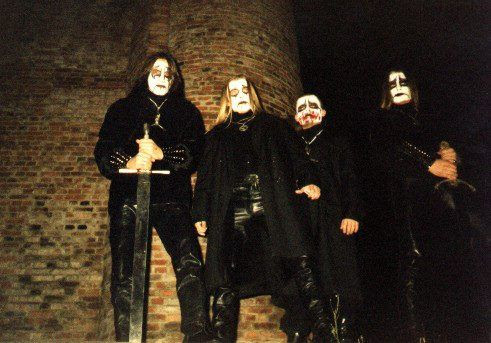
One thing I particularly like about this pseudo-nazi movement is the fact they have a disgustingly large amount of racial pride. Now, their racial pride is not what is good, but the fact that it influences their music is great. Many NSBM bands tend to include folk elements and traditional viking/northern instruments into their music, creating some of the most intricate and beautiful metal I have ever heard. A great example of a band that does this is Nokturnal Mortum... their albums Lunar Poetry and NeChrist have some of the most beautiful guitar melodies I have ever heard, mixed in with horns, fiddles, and other folk instruments, it makes for quite an interesting listen.


Most Neo-Nazis and National Socialists are older than middle twenties and look down upon the younger generations. These ideologies appearantly require one to "mature" before they can truly believe in them. Although I believe any sort of racial pride requires one to be very "immature", they're allowed to believe what they want.

Nokturnal Mortum, Burzum, Absurd, Kristallnacht, Thor's Hammer, Judas Iscariot, Abigor, Sunwheel, Behemoth, Vaginal Jesus, Iron Youth, Skrewdriver and Gontyna Kry
To be honest I actually have no idea if some of these bands are actually 100% nazi but they were bands I liked on Turn it Down's list of bands to NOT LISTEN TO UNDER ANY CIRCUMSTANCE. To all those trying to limit free speech... FUCK YOU!
Originally wrote by "Mayhem Fetus"
As the Raven Calls - Perspicacious Existence (2005)

As I pop this album into my CD player I find myself taken to a despondent, bizarre world not like many others out there. Melancholy, eeriness and dimness, all collide perfectly together here to shape the album ‘Perspicacious Existence,’ by As the Raven Calls. As the Raven Calls is a fairly new solo ambient project centered around James Raven from Philadelphia, PA, though to call this project purely ambient would be a lie as there are some strong neo classical influences, and even some more experimental tendencies.
The opening song ‘Unto the Breach’ is a mysterious dark droning sort of ambient piece that after a few moments makes use of sorrowful piano sounds, which set the mood perfectly for this album. ‘Where Truth Tells Me’ features a similar arrangement, but has odd distorted voices in the background, while ‘Sometimes it is Hard to Feel Anything’ sounds like a synthesized choir, perhaps somewhat video game soundtrack-ish. ‘Mind' is probably the most experimental song on the release with an odd murky feeling to it and the slight sounds of industrial noise in the background. ‘Empirical Self or I’ is certainly also a standout since it’s a baroque like sounding piano composition whilst ‘This Tiny Dark Corner’ again starts out with some pleasing piano before probing back into the video game soundtrack territory. ‘Of Glory’ is another favorite with a strong neo classical ambient tone somewhat reminding me of the ambient work from Ildjarn. And before I start to ramble I should also mention the nearly eighteen minute ‘Cuchulainn’ that brings to mind the older works from Mortiis, but with the inclusion of a depressing violin through a good portion of the song.
My only complaint is that at times some of the synths sound somewhat dated compared to other artists in this field, but it matters little since I’ve been listening to music of this nature for numerous years now. Ultimately, this is a very diverse album full of flavor and unique characteristics making Perspicacious Existence not an album to be missed. Fans of more melodic ambient artists like Mortiis, Ildjarn, Raison d`être, Dawn & Dusk Entwined, Convalescent and The Victims Shudder should take notice now, and purchase with haste. http://www.astheravencalls.com
4/10/2023
Impaled Nazarene Interview (2005)

JJM: Greetings Mika. Impaled Nazarene has been around for fifteen years now. Can you summarize Impaled Nazarene's career in fifteen words or less?
Mika: Chaos, alcohol, hot women, great crowds and superb extreme metal!
J: Imp Naz was one of, if not the first black metal band to come out of Finland back in 1990. How has the scene changed since then and do you prefer things the way they are now with the genre or do you prefer the old days better?
M: We were one of the first. Black metal became kinda popular after 1993-95, mainly thanks to Norwegian scene. Of course the scene was very different back then; there were fanzines, flyers, tape trading, and all the shit that seems to have gone away after the internet became the thing. Old times were good times, no doubt but I still prefer today’s situation. Why look back when you can look forward. As for Finnish black metal scene, never followed it closely back then, and I don’t follow it now either. There are good bands like Horna or Satanic Warmaster.

M: We have done one-off shows in States. We have done S.F., L.A., N.Y., Milwaukee Metal fest, March Metal Meltdown in N.J. and Philadelphia. We would love to tour North America but unfortunately all the offers we have been getting are pay to play kind. And I can tell you that it ain´t gonna happen that we pay to play. After 9/11 things got much harder, we need bloody work visas and shit whereas before that crap, we could just enter without any visas. As for touring with other Finnish bands, I would rather tour with foreign acts than Finnish ones.
J: After listening to the new live album several times I could really tell that Impaled Nazarene puts on one hell of a show. Are there any plans to ever release a live DVD?
M: Sure but not in the near future. I wanna do at least two more studio albums before even thinking of putting out DVD. We could have easily filmed the Tavastia gig and put it out at the same time as the live CD. I just think that it is rip-off shit to release same gig on CD and on DVD. Besides we need to film much more extra shit for the DVD, we have some killer material but we need more. Who the fuck wants to see live shit when you can see the madness behind stuff, that is much more interesting for me. When we will do it, I wanna do it totally pro. I have been watching lots of metal DVD’s lately and whereas picture quality is nice and all, sound quality is usually fucking awful, taken directly from mixing desk.
J: A lot of black metal bands have been formed when the members were still in their teen years. How old were you and the original members of Impaled Nazarene when you formed the band?
M: Between 17 and 19.

M: Common sense. Questioning things. I bought the Satanic Bible by LaVey and realized like fuck, this is what I think. I use Satan a lot but it is mainly a metaphor for me. I see myself as a nihilist much more than as a Satanist. I believe in pussy and alcohol and that’s it.
J: I've noticed that over the years you haven't written many songs with Finnish lyrics. Wouldn't it be more natural to write your words in Finnish or do you just write them in English so everyone can understand them?
M: Maybe it would be more natural but quite frankly; doing Finnish lyrics is much, much harder than doing them in English. I prefer doing them in English, and then I don’t have to explain to everyfuckingbody what the fuck I am singing about. Besides, it seems that most people don’t really read lyrics that closely. Which is a shame because there is a strong message on the songs; sometimes it is hidden but can be figured out.
J: What the hell does Suomi Finland Perkele mean?
M: Finland - Finland - Devil.
J: What would you say is your favorite Impaled Nazarene song and album?
M: Fave album is definitely the live album as it turned out to be exactly the way I wanted it to be. Fave song, well, I have not composed it yet...

M: I started as a drummer, moved on to guitar and ended up being a vocalist because I sucked as drummer and guitarist. I still do play guitar and I have composed songs to all of our albums from Latex Cult on. We all write material so that is one of the things that makes Impaled Nazarene unique. We all have different influences and you can easily hear that on our CD´s. All the punkier songs are mine.
J: What was your initial reaction to Teemu Raimoranta's unfortunate death a few years ago?
M: Shock and sadness.
J: If you had the power to destroy anything or anyone in this world what would it be?
M: Even though I should answer something clever like I would burn the Vatican down, I have to say that I would blow up my workplace and ejaculate in rapture while my co-workers would be dying in pain.

M: I have not seen them since 2000 and I must say I am happy with that as I have learned some things about them that I most certainly would NOT like to know. It is clear that drugs and rave music fucks you up but that badly. If people just fucking knew...
J: What bands are you currently listening to, and what type of bands did you listen to while growing up? Do you mostly listen to metal or do you have interest in other genres?
M: I grew up with Venom, Sodom, Kreator, Violent Force, Napalm Death, The Exploited, Ripcord, Extreme Noise Terror, Sarcofago, and so on. And still prefer to listen to my old records, on vinyl of course. There is one new band that really blew my mind, Municipal Waste. Man, for a dude like me who grew up with D.R.I. and Agnostic Front and Carnivore, this is real shit. I listen to mostly metal and punk; sometimes I listen to shit like Front242, Laibach, bands like that.
J: I'd imagine over the years of touring the world some crazy stuff has happened to you guys. Any wild drunken tales you can tell us about?
M: We were on tour in Mexico, I cannot remember in which city this happened at. Anyway, we finished our show, and we walking back to backstage (which was in another building) when this mega-hot-sex-bomb walks to me and smiles. She did not speak any English so I went for the throat and said: YOU? ME? SEX? HOTEL? SI? She smiled and said SI. I must say it was the easiest pick-up ever for me. We went to hotel and fucked the whole night. I was one happy little puppy. Mexico is always the best adventure, hehe.

M: Jack Daniels, thank you Satan.
J: Which of the seven deadly sins would you say you are the guiltiest of?
M: Lust and Wrath go hand in hand.
J: What activities do you do in your spare time?
M: Surf internet porn and wonder why I don’t get laid more.
J: A friend of mine is convinced that you're really Gollum from the Lord of the Rings movies. I say no, but he seems quite convinced. Any truth to this issue sir, hehe
M: Your friend should be glad I live on the other side of the globe.
J: Looking back at the past fifteen years, what would you say is your proudest musical achievement?
M: The fact that a small ug band like us has actually managed to tour the world, we have done and seen things your average Joe can only dream of. We are still here and we are still kicking ass. The best is yet to come.
J: Finally what are Impaled Nazarene's plans for the near future and when can we expect to see the next studio album?
M: We are busy writing material for our 9th studio album. We will enter Sonic Pump studio in November. We will record and mix the album with our soundman Tapio Pennanen. He did our live CD as well and because it turned out to be so good, we decided to use him for the studio album as well. At the moment it seems that the album should be out around mid-March 2006. These things can of course change. After that we will tour as much as possible. Don’t count on seeing us in the States though, unfortunately.
J: Mika I thank you for taking the time to do this interview. The final words are all yours.
M: Check out our live album, it is licensed to The End records so it should be available everywhere there. Hail Satan, Drink Vodka and Be Free!!!!

4/02/2023
Interview with Adhur (2002)

JJM: Okay who's in the band and what does each person play?
Eate: We are two people. I (Eate) do vocals, guitars and percussion, and Egoitz plays bass and keys. I make all the music and the lyrics. Anyway, many friends help us in recordings.
Ainhoa Soraluze: Mezzosoprano
Josu Lopez: Baritone
Haritz Solupe: Txirula
Leire Elizes: Violin
Xabi: Drums
J: How long has the band been together, and how much material have you released so far?
Eate: I created Adhur as my personal project back in 95. I thought that the best idea was to make everything by myself. Anyway, some time After I asked Egoitz to join the band. We recorded our only demo which included three songs and which was called 'Iluntasunaren Itzulera.' Our goal was to release a split k-7 with two other Basque Metal bandas, ILBELTZ and AIUMEEN BASOA. After a while, the Spanish label War is imminent offered us to release this split in a cross format digipack and we agreed. These three songs were included in the split CD called "Triarchy of Vasconia / Iluntasunaren Itzulera". Of course we did some new arrangments and the songs were mixed in a studio again. This happened two years ago, more or less.
J: What exactly does Adhur mean?
Eate: It’s a Basque word and it means magic strength. I choose it because it has many inner meanings.
J: What are your musical influences?
Eate: I consider myself open minded concerning music, so I listen to many different kinds of music. Names? Burzum. Dead can dance, Bathory, Deicide, The 3rd and the mortal, Bal-Sagoth, Emperor, Autumn Tears, Steve Vai, Celtic Music....
Eate: The Basque country is people which are divided between two States, The Spanish and The French ones. We, Basques, have a very different culture from other European peoples, not only for our mythology, but also for our language which is called Euskara. Since other peoples are Indoeuropean, we are preindoeuropean, which means that our cults as well as our cosmology vision are different. And concerning to our language, it comes from Neholitic which means that it's more than 10,000 years old . It's without any doubt, if not the oldest one in Europe.
The Basque metal scene is not a very big one, but I think that there are some really good bands such as ILBELTZ, NUMEN, AIUMEEN BASOA, CONTINUO RENACER, ELFFOR, DEMONLORD,SUFFERING DOWN. The problem is that there are not many opportunities to be known abroad and as no major label has ever signed a Basque band, it's quite difficult to promote your band. Anyway I think in a few years Basque scene will be known as a good and important scene, I hope so.
J: Does the band play live or is this mostly just a studio project?
Eate: Unfortunately due to line up problems we don't play live. The friends who help us in the recordings have their own careers and it's difficult to rehearse with them, so if things don't change a lot, ADHUR is a studio band.
J: How would you describe your guys' music? It seems to be rather diverse, and there's definitely lots of influences within it.
Eate: It's difficult to describe the music I create because they are expressions of my own feelings. But you are right, there are many different influences. I think it's a mix between medieval influenced music, Pagan Metal, and classic music.

Eate: The lyrical concept is very important for me. The main concept of the band is based in my country’s mythology, but I also mix my own feelings/visions with that. Language is the essence of the culture, it's the way the culture takes form. This is why I sing in Euskara or Basque, my mother tongue. Personally, I see no sense to consider you as a pagan person, trying to revive it, and then to sing in a foreign language. We also could sing in English, and I am sure we would sell more CDs, but English has nothing to do with Basque Culture.
J: How much time do you spend in the rehearsal room?
Eate: To be honest it depends if we are going to record something or not. As we are not a typical band with concerts and so on, we don't rehearse regularly.
J: Adhur was part of the 'TRIARCHY OF VASCONIA: Iluntasunaren Itzulera' three way split cd. How did this come about, and what do the other bands on the cd sound like?
Eate: The idea we had was to release the split in K-7 format, and titleed " Iluntasunaren Itzulera". Then, I sent a couple of CD-Rs to some mags and radios, and the guys from Black Light mag offered us a deal for one album. We agreed, and it was finally released under the title of "Triarchy of Vasconia / Iluntasunaren Itzulera."
The other two bands, ILBELTZ and AIUMEEN BASOA have their own personal sound, but we, all the three bands, have many points in common, the lyrics are in Basque and our interest in Basque Culture. ILBELTZ sound a mix between Heavy and folk rooted Pagan Metal, while AIUMEEN BASOA sounds more folk/doom/pagan Metal.
J: What do you think about the internet, mp3's and so on?
Eate: I think internet has some really good things. Small bands have much more possibilities to be known as well as to have an opportunity due to MP3. People can't judge your music just knowing where you are from or whatever, like it was some years ago. That time, people used to think that the only good extreme metal bands were from Scandinavia. The rest of Europe and the world were bad clones of those superior bands. But nowdays, due to the net and MP3, people judge what they listen, if they like it or not, not just reading a review from a mag or zine and you have to trust in the reviewers personal tastes . Obviously, there are also some bad things concerning the MP3. If people download complete albums for free, and then they don't buy albums, they are killing bands.
J: When will we see the first full length Adhur album?
Eate: Well, I hope it's soon,ha,ha,ha, but unfortunately things are going a bit slow with the new promo recording so I have no idea. Some labels have shown interest in the band but nothing is sure yet. Anyway, as soon as we record the new songs, they will be posted in our official web ( www.adhur.com )
J: And finally Eate if there is anything else you would like to add or say please go ahead and say it now.
Eate: Thanks for your support. Anyone interested in the band should check our web address www.adhur.com .
3/31/2023
Agalloch - The Grey (2004)

‘The Grey’ is the latest release from Portland, Oregon’s dark/folk metalers Agalloch. While on tour in early 2004 the band was selling this (limited edition of 1000 copies) EP, which features two new tracks. The first song is a reworked version of the song ‘The Lodge’ that originally appeared on the bands second full length album ‘The Mantle’ back in 2002. The other track is a remix of ‘Odal’ by Jason William Walton (Bass guitar) under his other band ‘Nothing.’
This reworked version of ‘The Lodge’ is really something completely different for the band as it's in more of a post rock like vein. This version doesn’t seem to bear too many similarities to the original since it’s a lot faster, and about eight minutes longer. Not to mention this version has only electric guitar and fast drumming, whereas the original was mostly acoustic guitar and had only some light percussion in the background. Overall it’s really quite a pleasing song, and as I understand it the band played this version a lot while on tour. This song also marks the first appearance of new drummer C. Greene, who will be the bands full time drummer from here on relieving John Haughm of his old duties behind the drum kit.
Nothing’s remix of ‘Odal’ to me doesn’t really sound anything quite like the original song, as this version is more dark ambient/noise-like sounding. It’s very atmospheric and ominous, yet it’s an interesting piece. I wonder if we can expect the next full-length album from Nothing to sound like this?
On the whole this is an interesting EP that shows a completely new side to this fantastic band. This may not be something for the casual Agalloch fan, but if you’re like me and you’ve been obsessed with the band since their debut album then I would advise you to hurry up and find a copy of this EP.
As All Die - Germanic Tales (2003)

As All Die is one of many projects spearheaded by Clint Listing. Alongside As All Die, Clint also played in ‘When Joy Becomes Sadness,’ ‘Radio Friendly Unit Shifter,’ ‘Long Winters Stare,’ ‘A Darkened Sea,’ and his most recent project ‘Broken Hands for Brilliant Minds.’ As All Die began in 1999 as more of a neo folk/industrial/ambient project, but after their 2001 release ‘Time of War and Conflict’ the project has been taken into a slightly new direction. Here on ‘Germanic Tales’ the first release since the debut album, As All Die is creating music more in the ambient/noise/militaristic vein.
The first song ‘Children of the Northern Lands’ is a fairly straightforward ambient composition -- dark, foreboding, and ominous, are but a few words that come to mind as I listen to this ambient piece. However it should be noted that this first song really isn’t all that melodic, but then again most real dark ambient music isn’t. Track two ‘Radios are down in London Tonight’ shows the first signs of noise & power electronics in an As All Die song. For this song the listener is treated to harsh noise mixed with alarming ambient music with a very apocalyptic feeling to it whilst a bell occasionally tolls in the distance. The percussion present also gives the feeling of bombs hitting the ground and machine guns being fired in the distance. Finally the last track ‘Funeral March’ reminds me of some of the songs found on ‘Times of War and Conflict.’ This one returns to more of an ambient sound with whispered vocals from Clint. Again the song features eerie synth work that really helps in transporting your mind to a war like setting or perhaps maybe the aftermath of a war.
I should probably also mention that this is a 3” CDR release. However unlike most 3” CDR’s this one features a nice little booklet, and even CD artwork, which I’ve never seen on any other 3” CDR’s before. All things considered, ‘Germanic Tales’ is a very pleasing release that successfully gives the listener the feelings of what it must be like to be present during a war. Unfortunately though there’s just a little bit over fifteen minutes of music present on this release. Still with any luck future recordings from As All Die will sound similar to this, and I’m quite certain I’ll be looking forward to hearing them if that is so.
3/30/2023
Art of Empathy - Evening Sessions (2007)

Prior to pressing play I had to look up the term Empathy to see exactly what it meant, since it failed to appear in my mind’s dictionary. Apparently the term means ‘The understanding and entering into another's feelings,’ which I suppose every human being can accomplish to an extent, though as everyone feels and thinks differently I personally find it hard to wholly understand another’s feelings, even if I’ve found myself in a near exact situation.
All personal babble aside, Art of Empathy is the solo medium of Jef Janssen who resides in Diest, Belgium. Jef’s lovely music is a hard one to pin point as it contains several qualities of dark folk and darkwave/ambient styled music. Jef himself handles the instrumentation of acoustic guitars, piano, synth, lead vocals, percussion, and programming, while he’s joined by four friends who add further vocal depth plus violin and flute.

Through these eleven songs I find myself constantly impressed, although ‘Delightful Darkness,’ ‘Dow Joneses Lullaby,’ and ‘Tiny Doll’ stand out the most. Pleasantly this album can be downloaded from last.fm, the Art of Empathy website, and the bands record label, which also contains a heap of admirable releases that I suggest you look into.
Largely I find ‘Evening Sessions’ to have little fault, and as I just said you can download it for free, if nothing else at least check out the songs I mentioned. You will be impressed by Jef’s dark art.
Arsis - Demo 2002 (2002)

Arsis is back in 2002 with a brand new promo and even more old school sounding melodic death metal carnage! It didn't take any more than the first couple seconds of this demo for me to realize how much it was going to kick ass! Just about everything on this new demo sounds like it's been improved since last year's promo – the vocals are grimmer, the drumming is more intense, the production is better, and almost every last second of this promo is loaded with awesome guitar riffs! In case you missed my last review of Arsis then let me tell you these guys are awesome.
Their music is melodic death/black-ish metal, but no this is not the corny watered down crap like Soilwork or In Flames. Arsis music is more similar to the sound of At the Gates, Dissection, Eucharist, ect. It's not exactly every day that I hear a promo that's so intense and just forces you to start banging your head at the start of every song. My favorite tracks from this promo are 'Elegant and Perverse' & 'Worship Depraved.'
Hopefully with a little luck this band will soon be signed, because they certainly deserve it. These guys have incredible skills, and they've proved it on this promo. I'm so sick of all the watered down shit so called melodic death metal bands that keep getting signed all the time. Give these guys a damn record deal already!
3/26/2023
Interview with Aardia (2003)

JJM: Why don’t we start off by having you tell our readers how the band was formed, who is in the band, and what they do?
Aardia: Aardia consists of two main characters, Patric Söderlund and Daniel Johnsson. Through a friend we met each other in 1998. It didn’t take long before we realized that we had the same interest in creating music. Patric was working on a dark-ambient project at the time called “Symphony of The Night”. We started to work together and found out that we complemented each other musically. Then we decided to create something new and so Aardia was founded.
Patric works as the project coordinator, music and idea creator. Daniel develops these ideas and creates the musical atmosphere. Daniel also works as a music and idea creator but mostly he deals with the technical parts. When all songs are completed we go to Gustaf Grefberg who has become something of a third member. He has access to a very good studio where we mix the songs together to get the final sound.
We are always open to welcome guest members that can and want to bring their music talents into production. For example we have Maria Carström who is a very talented singer. Ylva Grefberg who is a good designer. Nicklas Lundqvist who is a fantasy artist.
J: What’s the meaning behind the word Aardia and how is the word pronounced?
Aardia: The word Aardia is a mix of words from the Old Norse and doesn’t really mean anything. But of course it’s not meaningless. You could say that every Aardia release is a chapter in a greater story. Aardia is the magical beholder that binds these chapters together. We are currently making up the story to get inspiration for the music but we don’t know if the story is ever going to be published. Aardia is normally pronounced as it is spelled but to be more specific, [Are-Dee-Ah].

Aardia: We are very influenced by fantasy and horror films and books, also by computer games and the demo scene music from the 80s, and of course classical and orchestral music. We both have an interest in ancient and medieval stuff.
J: So far Aardia has released a demo and most recently a MCD. When can we hope to see the first full-length album from Aardia?
Aardia: In the near future we’ll start looking for an established record label that hopefully wants to sign us. If we don’t get any results we’ll continue to release Aardia under the ‘Witchcraft & Folklore’ record label.
J: Aardia is signed to the ‘Witchcraft & Folklore’ record label. Prior to hearing the band I had never heard of this label before. Where is the label based and what type of music does this label usually sign? Aardia: ‘Witchcraft & Folklore’ is Aardia’s own record label. That’s probably why you haven’t heard of it. This label is run by one of the members in Aardia, Patric. ‘WF’ has also released a couple of compilations with various artists.

Aardia: Yes, there are two versions of this tune. The first recording took place in the year of 2000. At that time Patric needed an intro to his compilation project called ‘Witchcraft & Folklore, Chapter 1’ which was a black metal CD. And later after that release we thought that ‘Fairy Tales From Beyond’ was a good title for our next Aardia release. To make the old recording fit on the new release we had to improve the sound quality and we also felt that the song wasn’t really complete.
J: How is the music of Aardia created? Is it all done on the keyboards/synthesizers or is there more to it than that? How much time is spent per week creating new music?
Aardia: Basically all music is created on a computer using sound samples mixed in a music tracker application. We only use synthesizers when creating melodies. We meet several hours a week but we do not create music all the time. We also try to get some inspiration out of films and music.
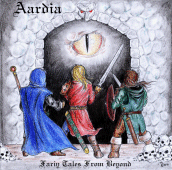
Aardia: Not that we know of. We know that he’s made some drawings for some magazines and role playing games.
J: Could the music of Aardia ever be performed to a live audience? Or will this band remain a studio only project?
Aardia: Aardia will probably never play live unless we can afford a nice screenplay with hired guest musicians and create something visual.
J: I must admit I’ve been greatly impressed by your music thus far. What are some other bands that play in your style that you could recommend to the readers and me?
Aardia: Ok, the bands that we’re about to recommend are not really in our style but sometimes a little bit similar to us. Who we recommend is Autumn Tears, Devil Doll, Fabio Frizzi, Goblin and Ennio Morricone.
J: Every time I listen to ‘Fairy Tales from Beyond’ I can’t help, but think some of the music sounds a lot like music found in video games, more specifically the music found in adventurous/fantasy/epic-like games. Has this been an influence?
Aardia: Maybe a little but mostly the influence for this song comes from an Italian zombie film called ‘The Beyond’.
J: You have some brief female vocals on the MCD. Who performed these and does she play in any other bands?
Aardia: The only female vocalist that could be recognized as a person we know is Maria Carström. She only brings lovely tunes into the third song called ‘The Wandering’. All the other voices come from unknown choirs taken from sound sample CDs. Maria is a country/folk music singer but unfortunately she doesn’t play in any other band. She does some recordings of her songs that she composes but she hasn’t been signed yet by any record label.
J: Speaking of other bands, do the members of Aardia play in any other bands/side projects?
Aardia: No.

Aardia: Of course we want people to buy our records but we believe that only big record labels and commercial artists suffer from downloads. Small bands like us who don’t have a lot of money to spend on promotion need to reach out to the listeners with the help of mp3. And hopefully it leads to sales.
Actually we had four songs on the MP3.com page but since they downgraded their service we had to pay money for having four songs. But three songs are ok without charge. We will probably change to another mp3 provider soon.
J: What other type of music do you enjoy?
Aardia: We are very versatile, listening to almost everything as long as it has a good melody.
J: Finally what’s the band currently up to and what are your plans for the near future?
Aardia: At the moment we are promoting the Aardia MCD release and we hope that some record label will sign us. We’re also creating music for coming releases of course.
J: I thank you for taking the time to answer these questions and also for sharing your great music with me. The final words are yours...
Aardia: Thanks for a very nice and well-written interview and keep up the good support for the underground scene.
Thanks,
Aardia
http://listen.to/aardia
aardia@clerk.com
Subscribe to:
Posts (Atom)